In Assisted Living, A Small Surface Issue Isn’t Small.
A slight crack.
A slick walkway after rain.
A subtle uneven edge.
For most properties, it’s maintenance.
For assisted living, it’s risk.
Because the people walking those paths aren’t just residents. They’re individuals who rely on stability, predictability, and safety every step of the way. And when something goes wrong, it’s not just a complaint.
It can be an incident.
Why Walkway Safety Matters More in Senior Living Environments
In assisted living facilities, outdoor walkways are used daily for:
- Mobility access
- Social interaction
- Exercise and independence
- Staff movement and emergency access
But aging concrete creates real problems:
- Cracks become trip hazards
- Worn coatings become slippery
- Uneven surfaces disrupt walkers and wheelchairs
- Standing water increases fall risk
And unlike other environments, recovery isn’t simple.
One fall can change everything.
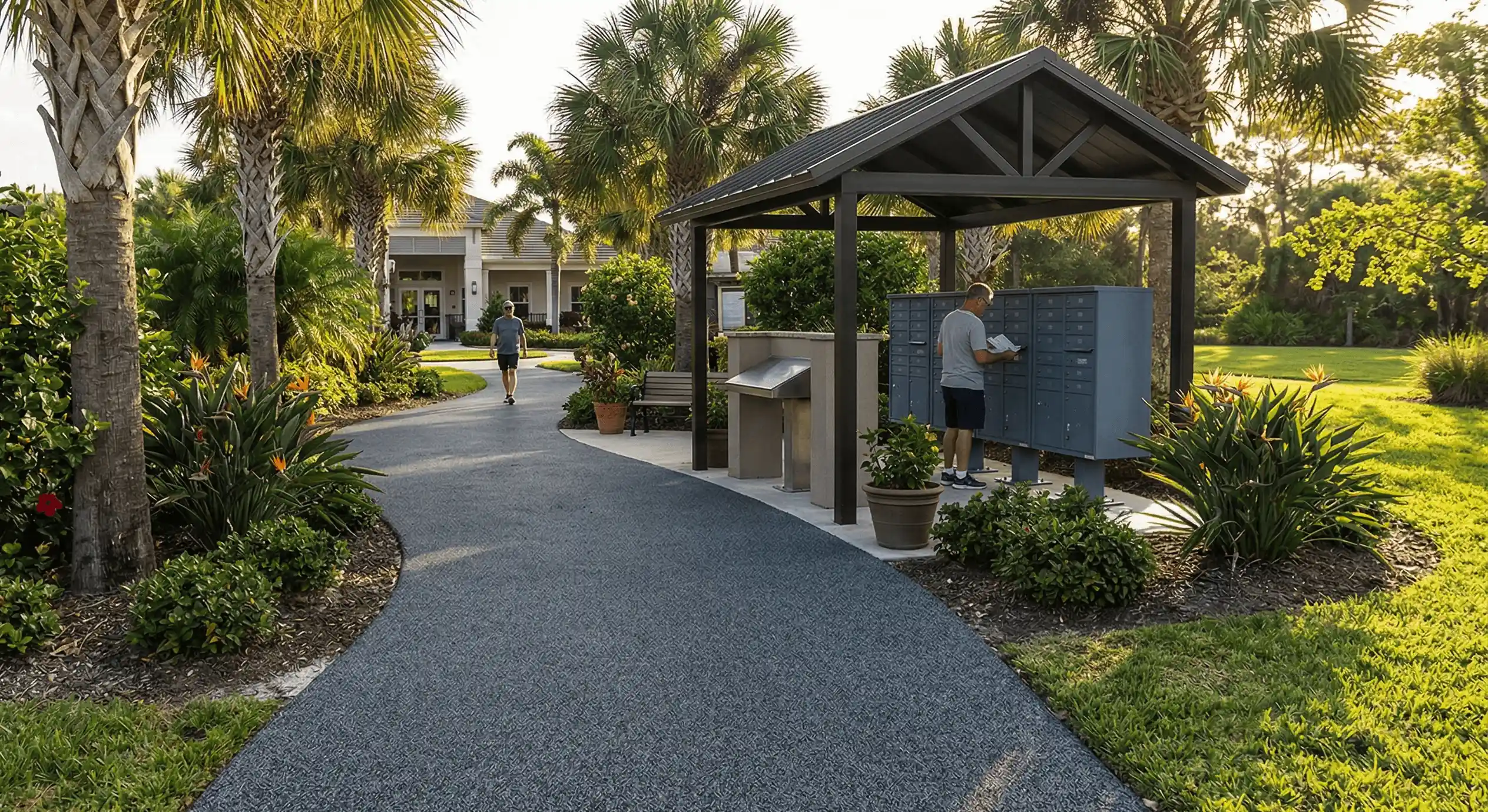
The Compliance Pressure Is Real—But So Is the Fear of Overbuilding
Facility directors and operators know they need to improve safety.
But here’s the tension:
- Full replacement is expensive and disruptive
- Projects can displace residents or restrict access
- Upgrades can trigger additional ADA requirements
- Timelines stretch longer than anyone wants
So decisions get delayed or patched temporarily.
Neither solves the actual problem.
What Safer Walkways Actually Require
For assisted living facilities, safety isn’t just about checking ADA boxes.
It’s about creating surfaces that are:
- Slip-resistant in all conditions
- Stable and even for walkers and wheelchairs
- Predictable underfoot
- Durable under constant use
And ideally, something that doesn’t require shutting down major parts of the property to install.
A Smarter Approach: Resurfacing Instead of Replacing
This is where more senior living communities are shifting. Instead of tearing out concrete, they’re upgrading it.
A poured-in-place system like Guardian Surfaces bonds directly to existing walkways, creating a safer, more consistent surface without demolition.
What that means for your facility:
- No heavy equipment moving through resident areas
- No extended closures of key walkways
- No drawn-out construction timelines
- Installation completed in days—not weeks
It’s not a coating that wears off. It’s a bonded surface designed to improve performance long-term.
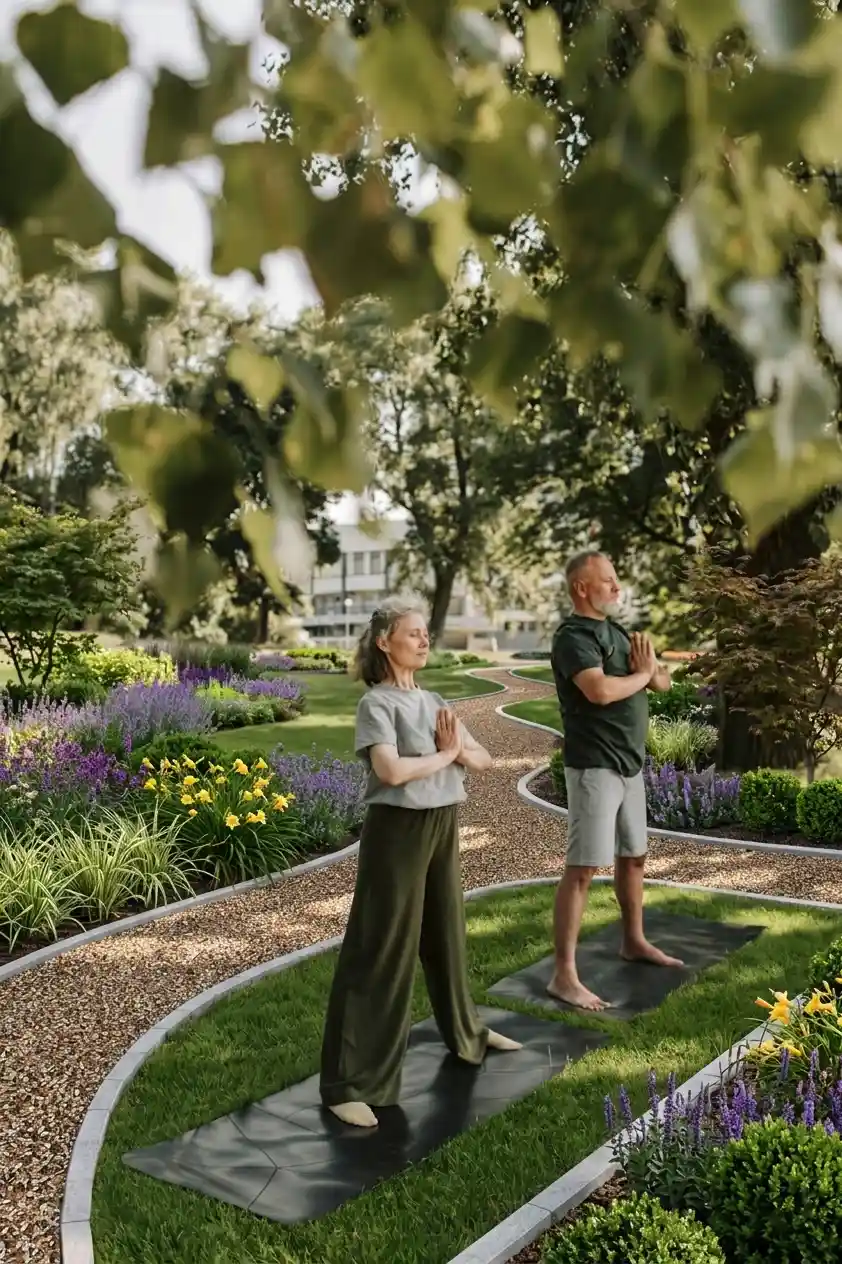
How This Reduces Fall Risk for Elderly Residents
This is where the difference becomes tangible.
A properly installed rubberized surface:
- Maintains traction even when wet
- Softens impact compared to bare concrete
- Eliminates small elevation changes that cause trips
- Creates a more forgiving, stable walking experience
For residents, that means more confidence moving independently.
For families, it means peace of mind.
For operators, it means fewer incidents and less exposure.
Minimizing Disruption During Installation
This matters more in assisted living than almost anywhere else. You can’t just shut down access for weeks.
Resurfacing allows for:
- Phased installation (area by area)
- Continued access to key pathways
- Minimal noise and equipment
- Faster return to normal operations
It’s designed to work within a live environment, not shut it down.
When This Makes the Most Sense
This approach is ideal if your facility:
- Has cracked or aging walkways
- Experiences slippery conditions after rain
- Needs safety improvements without major disruption
- Wants to avoid full replacement costs and timelines
If the concrete is structurally failing, replacement may still be necessary. But in many cases, it isn’t.
And that’s where this becomes a strategic decision—not just a maintenance one.
The Bigger Picture: Safety, Reputation, and Trust
In assisted living, every decision is felt beyond the property.
Families notice.
Staff notice.
Residents feel it every day.
Safer walkways don’t just reduce risk. They reinforce trust. And for operators, that’s everything.
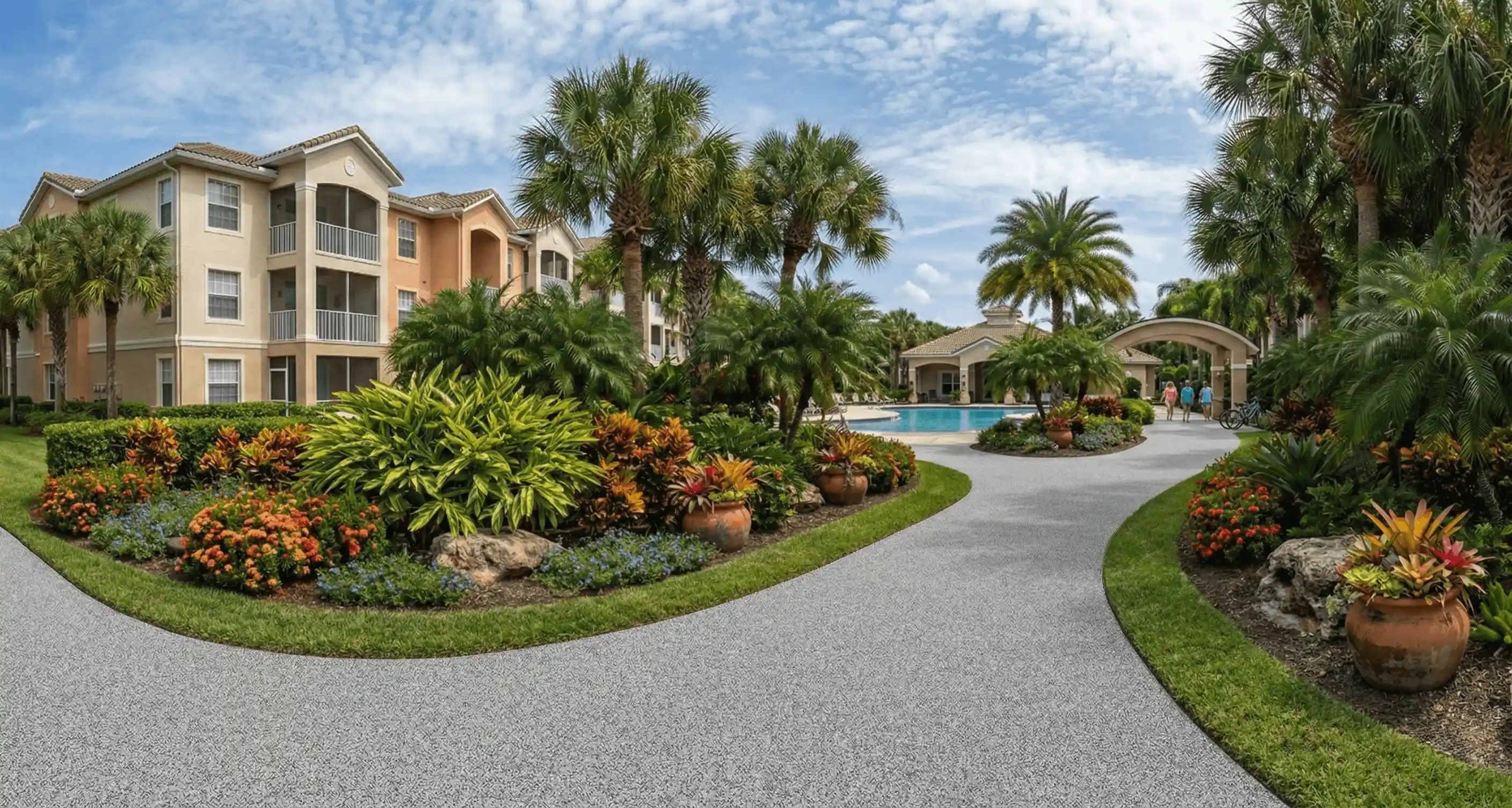
The Bottom Line
Most facilities assume they have two options:
Replace the concrete or keep patching it.
But for assisted living, neither is ideal. There’s a third path. One that improves safety, reduces fall risk, and avoids turning your property into a construction site.
That’s where resurfacing becomes the smarter move.
CTA: See If Your Facility Qualifies for a Safer Walkway Upgrade
Before committing to a full replacement, it’s worth seeing what’s possible.
Get a clear, side-by-side view of your current walkways and how they could be upgraded.
Request a rendering and estimate for your facility.